Classic New England Clam Chowder
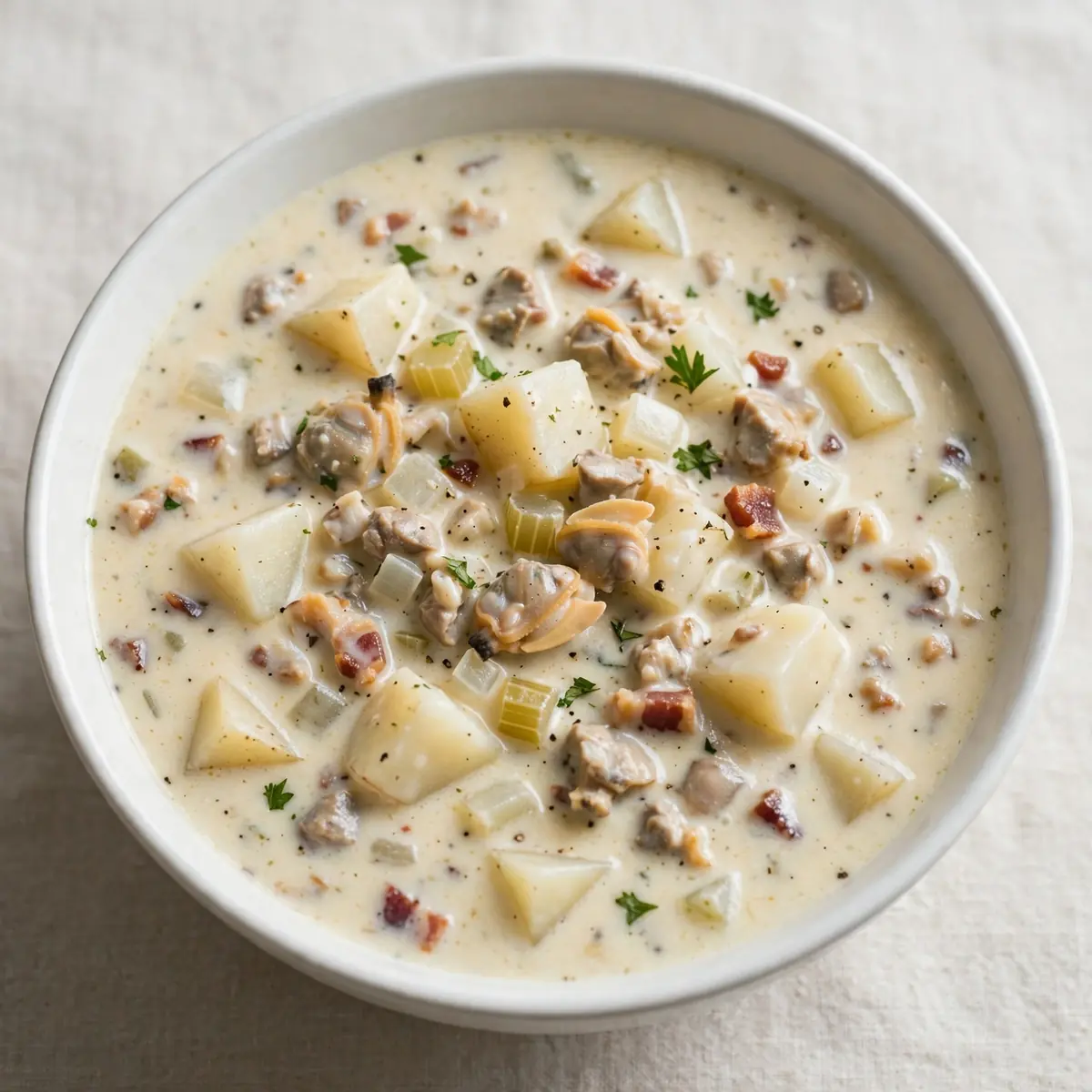
After a long day, the last thing I want is a sink full of pots and a complicated recipe. This Classic New England Clam Chowder comes together in one pot in under 40 minutes, using mostly pantry staples, so you can get a hearty, creamy dinner on the table without the fuss.
Recipe Overview
- Prep Time: 10 minutes
- Cook Time: 25 minutes
- Total Time: 35 minutes
- Servings: 4-6
- Difficulty: Easy
Why You’ll Love This Classic New England Clam Chowder
- One-Pot Wonder: From sautéing the vegetables to simmering the broth, everything happens in a single pot. That means fewer dishes and less time scrubbing after dinner — a win for any busy evening.
- Pantry-Friendly Ingredients: Tinned clams, potatoes, onion, and cream are items I almost always have on hand. This recipe is perfect for those nights when you haven’t had a chance to shop.
- Ready in Under 40 Minutes: No long simmering or complicated steps here. From the moment you start chopping the onion to the moment you ladle the chowder into bowls, you’re looking at about 35 minutes total.
- Make-Ahead Magic: The flavour actually deepens overnight, making this an ideal candidate for meal prep. I often double the batch on a Sunday so we have a quick reheat option for a busy Tuesday.
- Crowd-Freezing Friendly: This chowder freezes beautifully for up to three months. Portion it into individual containers for a speedy lunch or dinner that tastes homemade, even on the most hectic days.
Ingredients You’ll Need
- 2 tablespoons unsalted butter
- 1 medium onion (about 150g), finely diced
- 2 celery stalks (about 100g), finely diced
- 2 cloves garlic, minced
- 3 tablespoons plain flour
- 600ml chicken stock (or vegetable stock)
- 400g potatoes (about 2 medium), peeled and cut into 1cm cubes
- 2 x 200g tins of chopped clams, drained, with juice reserved
- 300ml double cream
- 1 bay leaf
- ½ teaspoon dried thyme
- Salt and freshly ground black pepper, to taste
- Fresh parsley, chopped, for garnish
Tip: Reserve the juice from the tinned clams. It adds a wonderful briny depth to the chowder that you can’t get from stock alone. If you’re short on time, you can skip peeling the potatoes — just scrub them well.
How to Make Classic New England Clam Chowder
- Sauté the aromatics. Melt the butter in a large, heavy-bottomed pot or Dutch oven over medium heat. Add the diced onion and celery, and cook, stirring occasionally, until the onion becomes translucent and soft — about 5 minutes. You’ll know it’s ready when the kitchen smells sweet and the onion has lost its raw, sharp scent. Add the garlic and cook for another 30 seconds, until fragrant.
- Make the roux. Sprinkle the flour over the softened vegetables and stir constantly for 1-2 minutes. The mixture will look pasty and clumpy at first, but keep stirring. You’ll notice it turning a pale golden colour and smelling slightly nutty. This step is crucial for thickening the chowder without lumps.
- Add the liquid. Slowly pour in the chicken stock, whisking continuously to prevent lumps from forming. The mixture will start to bubble and thicken almost immediately. Add the reserved clam juice, the bay leaf, and the dried thyme. Stir well.
- Simmer the potatoes. Add the diced potatoes to the pot. Bring the liquid to a gentle boil — you’ll see small bubbles breaking the surface — then reduce the heat to low. Cover and let it simmer for 12-15 minutes. The potatoes are done when you can easily pierce a cube with a fork; the tip should slide in with no resistance.
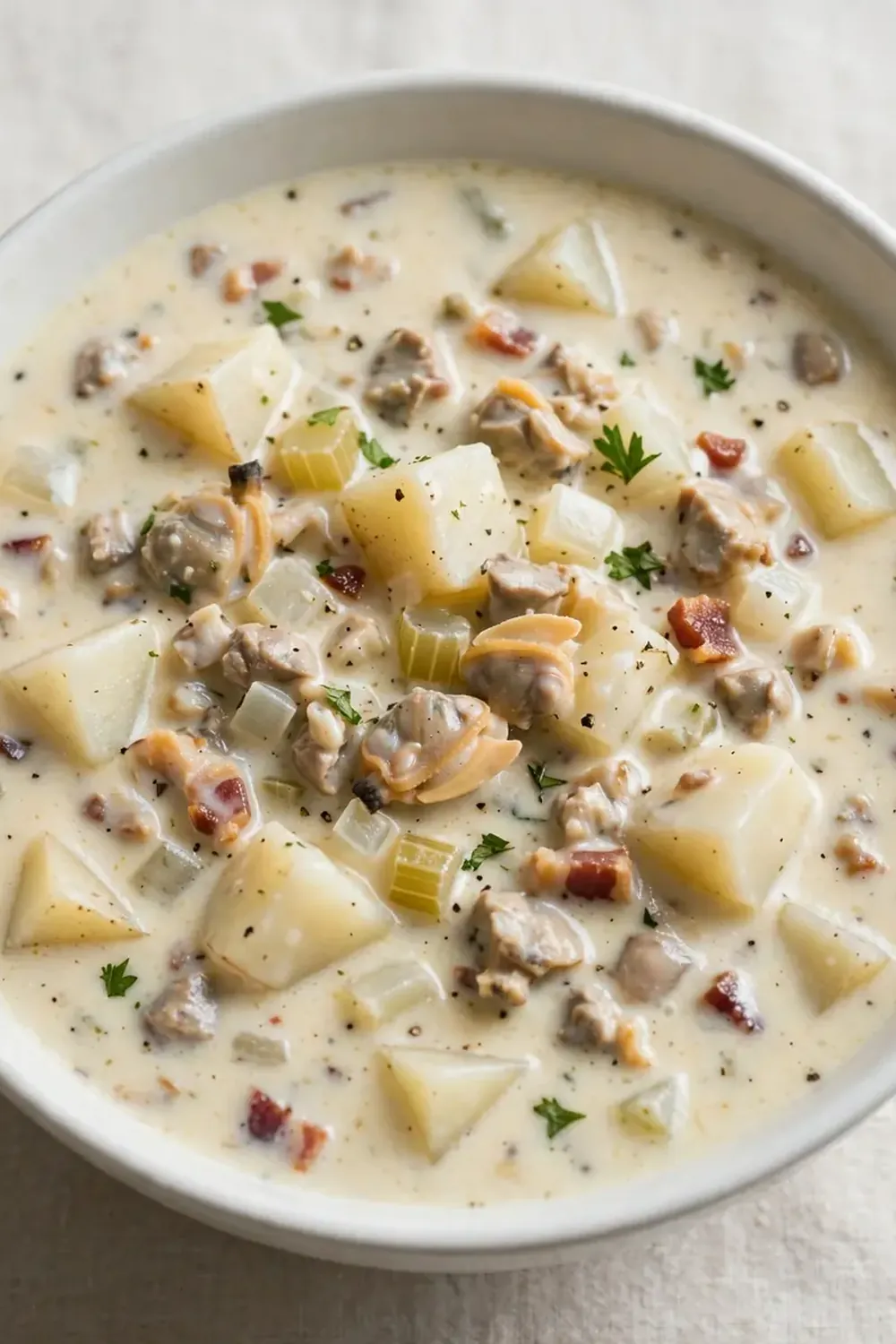
- Add the cream and clams. Pour in the double cream and stir gently. Add the drained clams. Increase the heat to medium and cook for 2-3 minutes, just until the chowder is heated through. Do not let it boil at this stage, or the cream might curdle. You’ll see the colour shift to a creamy, pale ivory.
- Season and serve. Remove the bay leaf and discard. Taste the chowder and season generously with salt and pepper. Ladle into bowls and garnish with fresh parsley. Serve immediately with crusty bread or oyster crackers.
Tips From My Kitchen
- Don’t skip the roux: Cooking the flour with the butter and vegetables before adding the liquid is the secret to a silky, lump-free chowder. If you add the flour directly to the broth, you’ll end up with a gritty texture. Taking that extra minute to stir the roux properly makes all the difference.
- Cut the potatoes evenly: I cannot stress this enough. If your potato cubes are different sizes, the smaller ones will turn to mush while the larger ones remain hard. I aim for 1cm cubes, and I use a sharp knife to keep them consistent. This ensures every spoonful has a perfectly tender bite.
- Use full-fat cream: After testing this recipe five times, I finally got it just right, and the secret is the fat content. Double cream (or heavy cream) gives the chowder its signature rich, velvety body. Semi-skimmed milk will make it thin and watery, and single cream won’t hold up to reheating.
- Make it ahead of time: I’ve been making this for over 2 years, and it never disappoints — especially the next day. The flavours meld beautifully overnight. If you’re prepping ahead, undercook the potatoes slightly by a minute or two, as they will continue to soften as the chowder sits. Reheat gently on the stove over low heat, adding a splash of stock or milk if it’s too thick.
- Freeze in portions: This chowder freezes wonderfully, but there’s a trick. Cool it completely, then spoon it into freezer-safe bags or containers. Leave a little headroom for expansion. When you’re ready to eat, thaw it in the fridge overnight and reheat slowly on the stove. I often freeze it in single-serving portions for a quick lunch that feels like a treat.
What to Serve With Classic New England Clam Chowder
- Crusty sourdough bread or a warm baguette for dipping
- A simple green salad with a sharp vinaigrette to cut through the richness
- Oyster crackers or saltine crackers, crumbled on top for a bit of crunch
- Steamed green beans or roasted broccoli for a lighter side
Frequently Asked Questions
Classic New England Clam Chowder
Ingredients
Method
- Sauté the aromatics. Melt the butter in a large, heavy-bottomed pot or Dutch oven over medium heat. Add the diced onion and celery, and cook, stirring occasionally, until the onion becomes translucent and soft — about 5 minutes. You'll know it's ready when the kitchen smells sweet and the onion has lost its raw, sharp scent. Add the garlic and cook for another 30 seconds, until fragrant.
- Make the roux. Sprinkle the flour over the softened vegetables and stir constantly for 1-2 minutes. The mixture will look pasty and clumpy at first, but keep stirring. You'll notice it turning a pale golden colour and smelling slightly nutty. This step is crucial for thickening the chowder without lumps.
- Add the liquid. Slowly pour in the chicken stock, whisking continuously to prevent lumps from forming. The mixture will start to bubble and thicken almost immediately. Add the reserved clam juice, the bay leaf, and the dried thyme. Stir well.
- Simmer the potatoes. Add the diced potatoes to the pot. Bring the liquid to a gentle boil — you'll see small bubbles breaking the surface — then reduce the heat to low. Cover and let it simmer for 12-15 minutes. The potatoes are done when you can easily pierce a cube with a fork; the tip should slide in with no resistance.
- Add the cream and clams. Pour in the double cream and stir gently. Add the drained clams. Increase the heat to medium and cook for 2-3 minutes, just until the chowder is heated through. Do not let it boil at this stage, or the cream might curdle. You'll see the colour shift to a creamy, pale ivory.
- Season and serve. Remove the bay leaf and discard. Taste the chowder and season generously with salt and pepper. Ladle into bowls and garnish with fresh parsley. Serve immediately with crusty bread or oyster crackers.
Notes
I hope this chowder becomes a regular in your weeknight dinner rotation, just as it has in mine. If you give it a try, I’d love to hear how it turned out. Drop a comment below and let me know — did you add any twists? Did your family go back for seconds? Happy cooking, everyone.